In many businesses, tip QR codes are assigned to specific employees. As long as that employee stays on the team, everything works smoothly. But when someone leaves, goes on vacation, or transfers to another location, additional work begins: stickers, badges, table signs, and other materials with QR codes need to be replaced.
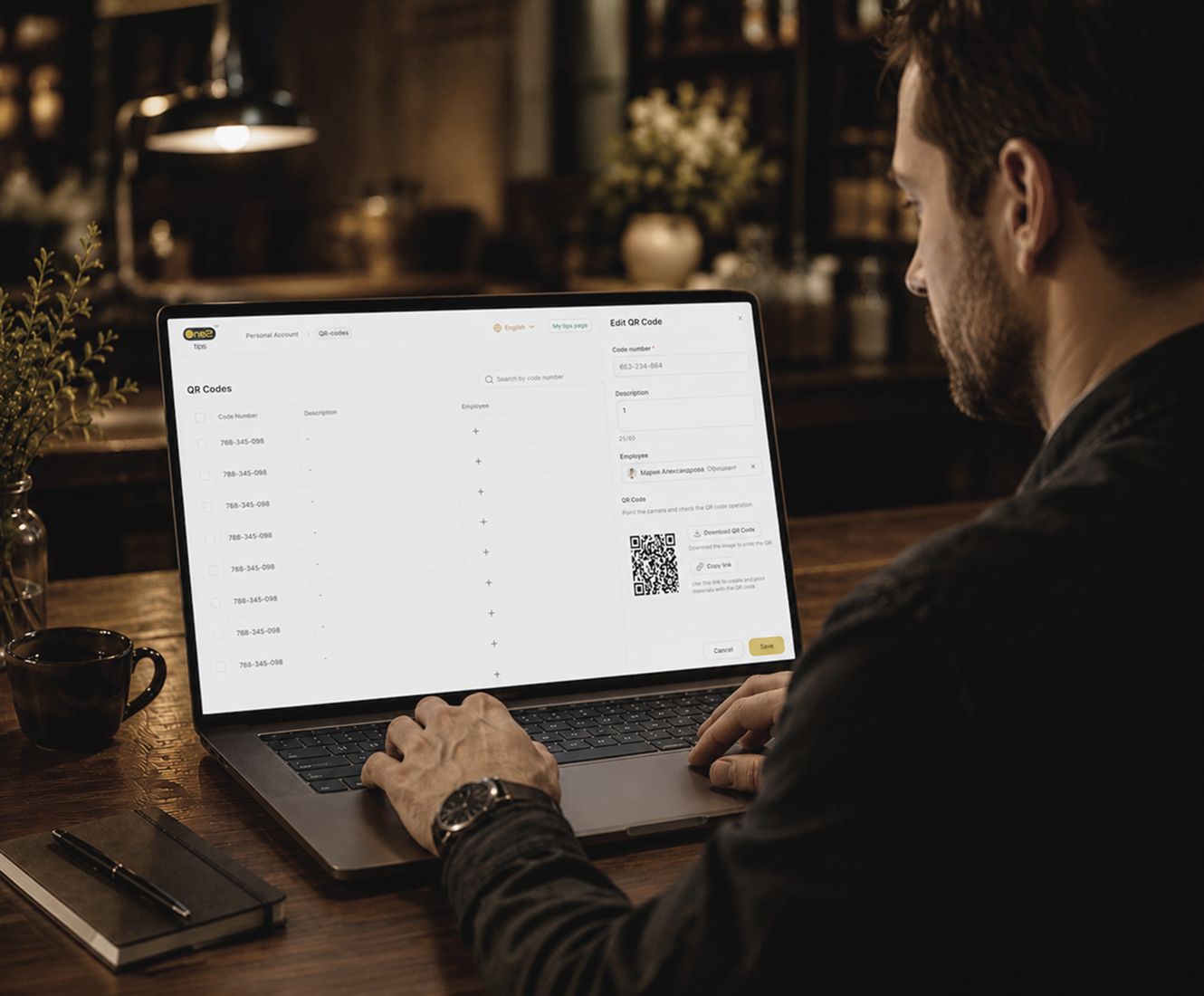
At One2Tips, we take a different approach. A QR code can be reassigned to another employee at any time through the management dashboard, without replacing the physical materials.
What is a universal QR code? A universal QR code is a tip QR code that is not permanently tied to a single employee. The QR code itself never changes, while its assignment can be managed within the system.
Once created, the QR code can be placed on tables, menus, counters, stands, or employee badges. If needed, managers can simply assign that same code to a different employee without replacing the printed material.
For guests, the process remains exactly the same: they scan the QR code and leave a tip. All changes happen behind the scenes in the management system.
How universal QR codes work Receiving QR codes The business receives the required number of tip QR codes. The exact number depends on the company’s operational setup and internal processes. Adding QR codes to the dashboard Все QR-коды добавляются в личный кабинет One2Tips. Здесь отображается список кодов и информация об их текущем назначении. Assigning employees Each QR code is assigned to an employee. The process takes only a few seconds: select a QR code, choose an employee, and save the changes. Placing the materials After setup, QR codes can be placed throughout the venue: on tables, trays, counters, menus, or employee badges. The materials only need to be printed once. Reassigning when things change If an employee leaves, goes on vacation, changes shifts, or a new team member joins, managers simply update the assignment in the system. The QR code itself remains unchanged. When universal QR codes are most useful Businesses with shift-based scheduling In restaurants, cafés, and other service businesses, different employees may serve the same table during different shifts. Instead of printing multiple sets of materials, businesses can use a single QR code and reassign it as needed. High employee turnover Staff turnover is common in the service industry. With traditional QR codes, every staffing change can mean additional printing costs. Universal QR codes eliminate that expense. Seasonal employees Summer patios, holiday seasons, and temporary staff don’t require new QR codes. Existing codes can simply be assigned to new employees. Multi-location businesses Companies operating multiple locations can manage all QR codes from a single dashboard. When employees move between locations, managers only need to update the assignment. Business benefits Universal QR codes help reduce the cost of printing employee-related materials. Stickers, table signs, badges, and other branded materials no longer need to be replaced whenever staffing changes occur.
They also reduce administrative work. Instead of ordering and waiting for new materials, managers can update assignments in just a few clicks.
For businesses with large teams or frequent staff turnover, this makes tip management significantly easier.
Security and Data Accuracy Every QR code in the system is linked to the employee currently assigned to it.
If a QR code is temporarily unassigned, guests cannot accidentally send tips to the wrong person. Assignment history is stored in the system, allowing managers to see who was linked to a QR code at any given time.
Conclusion Universal QR codes make it easy to manage digital tipping without constantly reprinting materials. Once QR codes are placed, everything else can be managed through the dashboard: reassign employees, update assignments for different shifts, and adapt the system as your business evolves.
This approach is especially valuable for restaurants, cafés, hotels, and other service businesses where staffing schedules change regularly.
One2Tips is a platform for digital tipping, employee management, and staff incentive programs.